

Strategy and mindsets
Musings, perspectives and other thoughts


The first article I wrote on Substack when I switched platforms for Strategy Insights in early 2024 was titled ‘The mindsets of strategy’, in which I reflected on how the shock of the COVID-19 pandemic had prompted organisations to start to think differently about possible futures, and how this required a different mindset:
“Thinking about the future with an openness to consider possibilities and being prepared to adapt and learn requires a sense of humility (accepting that you don’t know the answers) - it is an 'explorer' mindset that is very different from the 'predict and control' approach.”
Over the past couple of months I’ve been thinking a lot about the importance of mindsets and how these affect an organisation’s approach to strategy.
Arguably, mindsets are fundamental.
There’s a lot of ‘angst’ expressed about the failure of organisations to implement their strategies successfully (especially on LinkedIn and other social media by those telling them ‘how they ought to be doing it’!): the argument goes that because an organisation’s strategy isn’t fully realised then it must be that the organisation hasn’t implemented it properly, so it needs to do better.
But what if we reframe this, and consider the organisation’s strategy and strategic plan as just helping it on the next stage of its strategy journey, and that whatever is the situation now is simply the starting point to work out the next stage: the fact that events haven’t worked out exactly as intended is to do with the nature of how life unfolds as much as the actions and abilities of the organisation. What matters is (i) what has been learnt, and (ii) what happens next - building on the organisation’s understanding of its current situation to map out the next steps on its journey.
These are very different ways of viewing the situation, and derive from different mindsets about the role of strategy in organisations - and indeed, about the nature of organisations too.
‘Mindset’ is one of those terms that everyone understands but might have a slightly different interpretation of - each of us derives this individually from a combination of our worldview, our beliefs and values, and the constructs that we have developed from our experience and relationships in trying to make sense of a situation and context. Mindsets can evolve - they’re not fixed - but they are fundamental to how we see things at any particular moment in time. They are often latent, implicit and unarticulated, yet they influence how we assess and act in a situation - and in an organisational context they affect judgements that are made and the decisions that are taken.
Mindsets (and the associated mental models that develop from them) are at the deep-set and invisible core of an organisation’s culture (well illustrated in Edward T. Hall’s Iceberg analogy), and they have a fundamental influence on the organisation’s approach to strategy - yet it is only in hearing how people in an organisation talk about strategy that you can begin to infer some of the aspects of the mindset that is influencing this.
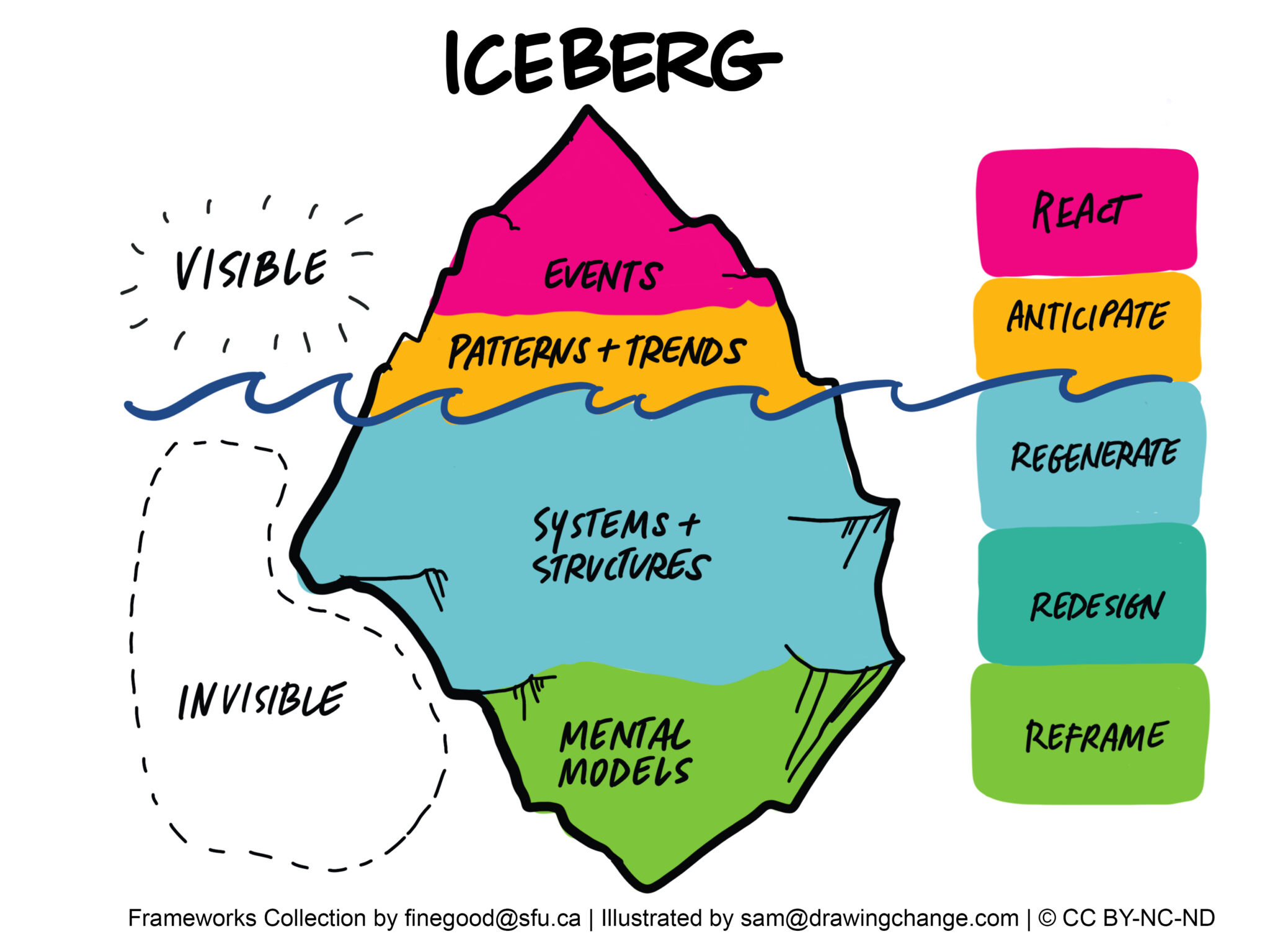
One of the fundamental differences in how organisations approach strategy is between those that see their organisation as being in control of its own destiny and its strategy as setting out a definitive path to be followed (and being self-critical when it isn’t), and those for whom strategy work is about continually making sense of the organisation’s situation within an evolving ecosystem and adapting accordingly for the next stage on its strategy journey.
There is a similar difference between the view of strategy leadership as being about command and control, and seeing it as being about building the organisation’s strategy capabilities and encouraging and enabling effective strategy conversations and decisions.
There is a fascinating and thought-provoking illustration of the influence of different mindsets in a recent paper by Professor Áine Carroll in which she analyses and reflects upon her experience leading and influencing change within the health and care system in Ireland, including the effect on this of those who see leadership as being about command, control and compliance, and those that approach this as continuous interpretation and enabling: she remarks that this distinction “is rarely captured in formal evaluations but is central to understanding why transformation efforts succeed or fail”. (Although it is about an individual leader’s experience within a health and care system context, the observations have a wider resonance and relevance across other organisations too.)
Understanding the importance of mindsets helps in appreciating why an organisation adopts a particular approach to strategy: it reinforces the uniqueness of that organisation’s context and situation, and why there is no ‘right’ way to ‘do strategy’ that applies in every case (which is why many of those claims on LinkedIn are so limited and narrow).
In her excellent book ‘The Dao of Complexity’ Jean Boulton talks about the asymmetry of our brains (Chapter 45) and how our right brain works to understand and attune to situations whilst our left brain works out how to act: the right brain is about values, the left about decisions and control. They work together of course in complex ways, but if the left brain dominates we can see the world as logical and machine-like (hence the self-deterministic ‘in control’ organisation-centric view that pervades much of our Western hemisphere approach to organisations), whereas right-brain thinking is more comfortable with ambiguity and complexity.
An organisation’s approach to strategy reflects the collective mindset that has developed from the balance between these two ways of thinking and which is inherent in the organisation’s ‘culture’ (like mindset, somewhat nebulous to articulate in a particular instance). Each organisation has to find its own way of making sense of its situation at any particular time, setting its direction and path forward, and working out how it can adapt to an evolving future.
Mindsets aren’t fixed: they can evolve through the experience of learning and adapting, both individually and collectively. New perspectives can emerge, interpretations and beliefs change, events and people influence, and the organisation’s approach to strategy can develop accordingly. In my worldview this is how organisations grow, by continually considering their situation, learning and adapting, and strengthening their capabilities to help them thrive in an emerging but uncertain future and to tackle the next stage of their strategy journey.
Discovery, learning, and adapting: 100%.